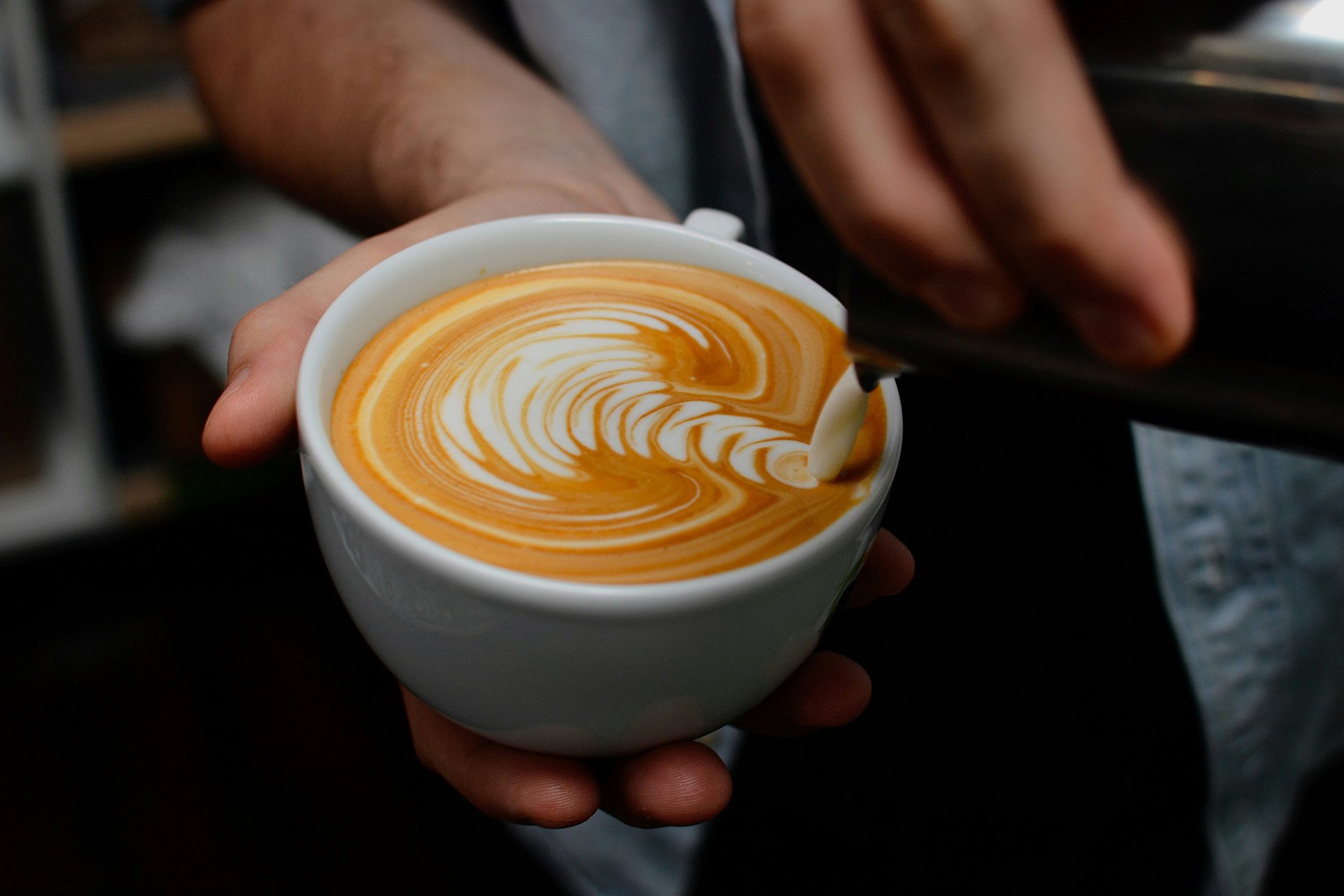

Coffee cup prices have shot up recently. An oat milk Flat White is now over £4 at many independent specialty coffee shops in central London. Nationwide, prices have risen more than 20 percent since the covid lockdowns.
If further increases occurred in line with the Bank of England’s inflation target of two percent per year, a Flat White would cost £5 in the late 2020s. However, expect prices to increase much faster.
Price rises are not caused by gouging. Coffee cup prices are largely shaped by staff and premises costs. Together these costs comprise over half a coffee’s price. The United Kingdom’s sales tax, VAT, is currently set at twenty percent. The two aspects consumers think they’re paying for – coffee beans and profits – are, in fact, only a small fraction of the price.
The inevitable £5 Flat White
The post-covid inflationary environment both necessitated and provided cover for recent price increases. Coffee businesses operate with slim profit margins, often aiming for ten percent, with many surviving on just three or four percent.
As supply chain shortages and increasing energy costs cascaded through to businesses, price rises were required. However, it is staff shortages that drove the scale of the increase.
Baristas are now paid a larger share of a cup’s retail price than ever before. After an initial period of low wage growth in the 2010s, wages have steadily increased since the Brexit vote in 2016. With few young Europeans now working in the United Kingdom, the labour market is tight and there is little sign that staffing costs will decrease anytime soon.
Despite these challenges, many business owners have often opted to fight rather than fold. Heading into the pandemic, many businesses were financially vulnerable with profits having been squeezed by years of intense competition. Government-backed covid loans initially saved many businesses and subsequently served to suppress price rises after lockdown lifted. The recent increases have merely returned retail prices to their long-term trend, but now with a higher cost basis. Coffee businesses, like much of hospitality, remain under financial pressure.
Coffee drinkers have been the winners. They have benefitted from incredible choice, good quality and low prices. But prices will inevitably further rise. In fact, current staff costs mean further price rises are already required.
How did we get here?
A combination of Brexit, competition and venture capital has disrupted the coffee shop business model. Intense competition is a natural feature of the coffee shop market. There are few barriers to entry and many independent owners are satisfied with minimal profits.
The already fragile business model further deteriorated as Brexit increased costs and outside investment has enabled select coffee chains to pursue market share over profitability. These factors have suppressed price increases, even as staff costs have continued to rise.
In the early 2010s, independent coffee shops budgeted staff costs at 30% of net revenue. Following the Brexit referendum, staff costs rose towards 40% as cup prices increased only to cover higher barista wages. Today, some shops spend nearly 50% of net revenues on staffing.
| Classic Model – pre-Brexit | Current Situation – post-Brexit | A profitable model in 2025/26 might be… | ||||
|---|---|---|---|---|---|---|
| Flat White incl VAT | £3.00 | £4.00 | £5.00 | |||
| less VAT | £0.60 | £0.80 | £1.00 | |||
| Flat White ex VAT | £2.40 | £3.20 | £4.00 | |||
| COGS | £0.36 | 15% | £0.36 | 14% | £0.56 | 14% |
| Cup | £0.12 | 5% | £0.12 | 5% | £0.18 | 4.5% |
| Rent, Service, Rates | £0.48 | 20% | £0.58 | 18% | £0.76 | 19% |
| Staff | £0.72 | 30% | £1.41 | 44% | £1.44 | 36% |
| Utilities, overhead etc | £0.48 | 20% | £0.58 | 18% | £0.76 | 19% |
| Profit | £0.24 | 10% | £0.03 | 1% | £0.30 | 7.5% |
With marginal profitability, the coffee shop business model is actively being re-written. But the industry is yet to identify a model that can endure for more than a couple of years. It’s a dynamic moment.
If cup prices truly reflected current staff costs under the previous business model, a Flat White would already cost over £5. Instead, proprietors have taken a number of measures to keep price rises down. Firstly, they opted to cut ingredient costs, with most businesses buying slightly lower quality coffee. Customers of these businesses either did not noticed or have been willing to trade down.
Many owners have also fully re-engaged with the business, taking back day-to-day management. Productivity has been enhanced with the implementation of barista-assisting equipment. Unprofitable trading hours and cornucopian food ranges have been cut to straightforwardly profitable offers.
Additionally, speed of service has decline, especially at peak times of day, with fewer baristas rostered on to reduce staff costs. Finally, many owners have accepted reduced profitability.
In 2010/11 a single shot Flat White retailed for around £2.70. Adjusted for today’s money, that would be £4.05. A soy flat white (oat milk was not widely available then) costed about £4.65 in today’s money. Proprietors have done an extraordinary job of limiting price increases given recent events, but current measures are largely exhausted.
Future price predictions
A £5 flat white is a psychological barrier, for both operators and consumers. Similar to the £3 and £4 price points, expect prices to linger just below the threshold for as long as possible – before jumping to £5.20.
To enhance business viability, operators will continue seeking ways to trim costs and boost productivity. Falling energy prices are welcome and stable ingredient costs make planning easier. But the greatest opportunity is to increase the number of cups each barista can prepare per hour.
Many specialty coffee shops have already streamlined barista workflow, the next step is full automation. Superautomatic machines have advantages and disadvantages compared with classic espresso machines. However, under mounting financial pressure, proprietors will now weigh the differences more commercially and less philosophically.
With no need to manually dial in, weigh doses, or measure outputs, superautomatic machines offer the dual financial advantages of enabling baristas with lower coffee-making skills and reducing the labour cost per cup. We anticipate more specialty stores to embrace superautomatic technology. Such a transition will mark a new chapter for specialty coffee which has, until now, defined service as much a part of its proposition as product quality.
Even for businesses that demand the quality, or its perception, that comes from operating classic espresso machines, further automation across the workflow is desirable to further boost barista productivity. Equipment updates enable doses to be pre-weighed and ground, shots to be calibrated for quality and milk to be automatically aerated.
The £5 Flat White is inevitable, but we’re not there just yet. Proprietors are pulling every lever to keep prices for coffee drinkers as low as possible.